Reviewing Please Don’t Kill My Character for Embroidery
As a designer who spends half my life staring at digitized files and the other half watching needles punch through fabric, I have learned that not every cute graphic translates well to thread. When I first encountered Please Don’t Kill My Character, my initial reaction was one of recognition. It taps into that specific, humorous anxiety shared by tabletop gamers everywhere. But as an embroidery product reviewer, my job is to look past the meme and see the stitch path. Is this just a funny phrase, or is it a viable asset for your next commercial embroidery project?
The design falls under the category of Crafts and specifically serves as Graphics for cutting machines, but its potential in machine embroidery is significant if handled correctly. The retro aesthetic suggests a bold, clean look, which is generally good news for stitch clarity. However, the devil is always in the details when we move from vector lines to actual thread on fabric.
The First Impression: Mood and Visual Personality
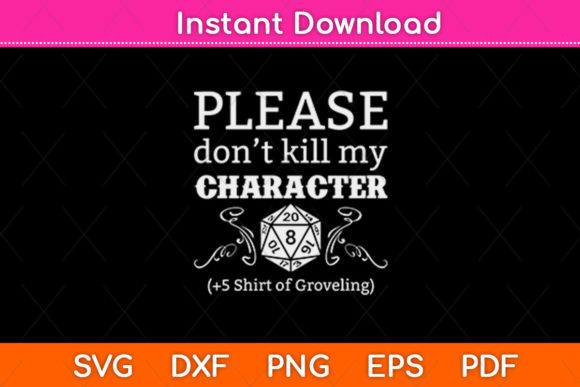
The mood of Please Don’t Kill My Character is playful yet urgent. It captures the dramatic flair of a Dungeon Master’s table. Visually, the retro styling implies thick lines and solid shapes. For an embroidery designer, this is promising. Thin, wispy lines often get lost in fabric texture, but bold retro typography tends to hold up well. The layout likely centers the text, making it a focal point rather than a subtle accent. This visual personality screams "statement piece," which means it belongs on items where the wearer wants to be noticed.
When I imagine this as a finished product, I do not see it on a delicate silk scarf. I see it on sturdy cotton canvas or heavy fleece. The theme dictates the medium. It is a design for people who want their hobby to be part of their daily wardrobe, not hidden away in a game box.
Real-World Application: Where This Design Shines
Let us talk about practical use cases. I recently considered this design for a custom embroidered tote bag. Tote bags are popular among Etsy sellers because they are functional canvases. Using a satin stitch for the lettering against a natural canvas background creates a beautiful contrast. The thread sheen adds a premium feel to what is otherwise a simple bag. This transforms a basic accessory into a personalized gift that feels thoughtful and specific to the recipient’s interests.
Another strong contender is sweatshirt embroidery. A crewneck sweatshirt provides a large, stable surface area. Here, you can afford to let the design breathe. If the file allows for scaling, placing this across the chest or even larger on the back makes a bold statement. For small shop products, this kind of niche humor drives engagement. It is not just apparel; it is a badge of identity for gamers.
I also see potential for embroidered patches. Patches are versatile design assets. You can stitch this onto a stabilizer-backed twill, cut it out, and sell it as an add-on item. This appeals to craft business owners who want to offer modular products. A customer might buy a plain jacket and then purchase your patch to customize it themselves. This increases the perceived value of your digital embroidery file offerings.
Technical Considerations and Stitch Behavior
While the concept is strong, we must address the technical realities. Since the source file is described as an SVG for cutting machines like Cricut or Silhouette, it is crucial to understand that this is not automatically a ready-to-stitch embroidery file. You will likely need to digitize it yourself or convert it using specialized software. This is a critical step for any professional designer.
If you are digitizing this from scratch, pay close attention to stitch density. Retro fonts can be blocky. If you fill these blocks with too many stitches, you risk puckering the fabric, especially on lighter materials. I recommend using a combination of fill stitches for the larger letters and satin stitch for smaller elements or outlines. Always test the design on scrap fabric first. Do not assume the default settings will work.
Thread color contrast is another vital factor. On dark fabric, such as navy or black hoodies, you will need bright, high-visibility thread colors like white, neon green, or gold. On light fabric, you can go darker. Always check your design in black and white mockups to ensure the shape remains readable without color reliance. If the letters blend into the background, the joke is lost, and so is the sale.
Fabric and Hoop Constraints
Where should you use caution? Small hoop sizes are a challenge. If the text is long, it may not fit in a 4x4 inch hoop without reducing the size to the point of illegibility. For caps and hats, curved surfaces distort designs. I would avoid placing this complex text on the front panel of a structured cap unless you have advanced digitizing skills to compensate for the curve. Textured fabrics like terry cloth or heavy knits can swallow small details. Ensure your running stitch underlay is robust enough to stabilize the fabric before the main stitching begins.
For baby embroidery, consider the softness of the thread. While the message is funny, babies do not play Dungeons and Dragons. However, older siblings or parents might appreciate it on a diaper bag. Just ensure the stitch density is not so high that it creates a stiff, uncomfortable patch on soft baby clothes.
Commercial Viability and Brand Consistency
For the Etsy seller or creative entrepreneur, this design offers high giftability. It is specific enough to feel personal but broad enough to appeal to a large community. When you list this as a handmade product, emphasize the quality of the stitching. Customers trust professionalism. A clean, well-digitized design signals that you care about your craft.
Before selling finished items, you must confirm licensing. The product description mentions it is an instant download file for cutting machines. It does not explicitly state commercial embroidery rights. Always verify whether you can sell physical products made with this design. If the license is unclear, contact the creator. Protecting your craft business from copyright issues is as important as the stitching itself.
In terms of brand consistency, if your shop focuses on geek culture or retro vibes, this fits perfectly. It enhances your portfolio of design assets. Use it in printable mockups to show customers how it looks on different garments. This helps buyer engagement and reduces hesitation.
Final Verdict for the Modern Maker
Please Don’t Kill My Character is more than just a funny phrase. It is a design opportunity. It works best on sturdy fabrics, in medium to large hoop sizes, and when executed with careful attention to stitch density and thread contrast. Whether you are creating a holiday embroidery gift for a gaming friend or adding a new item to your small shop product line, this design has merit. Just remember to treat the SVG as a starting point, not the final stitch file. Test, adjust, and stitch with confidence. Your customers will appreciate the effort you put into making their fandom wearable.