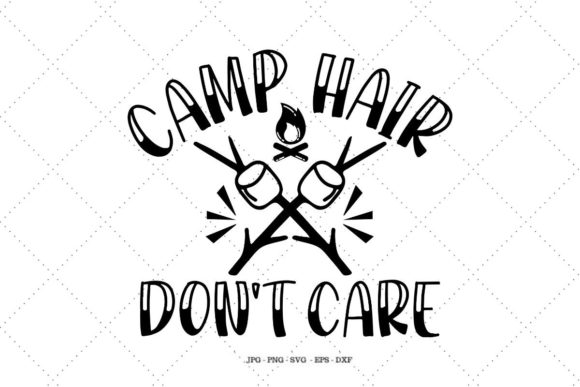
Camp Hair Don't Care: A Designer’s Review
As an embroidery designer who has spent years digitizing patterns and testing them on everything from delicate baby onesies to heavy-duty canvas tote bags, I have learned that not every cute phrase translates well into thread. When I first loaded the Camp Hair Don t Care design into my software, I was immediately struck by its playful attitude. It captures that specific, relaxed vibe of outdoor enthusiasts who prioritize comfort over coiffure. But as professionals, we know that a good concept is only half the battle. The real question is how this machine embroidery design performs when the needle hits the fabric.
First Impressions and Visual Personality
The layout of Camp Hair Don t Care feels balanced and approachable. It does not rely on overly complex shading or microscopic details that might get lost in the stitching process. Instead, it leans into bold, readable typography paired with thematic elements that suggest warmth and wilderness. For those of us in the Crafts and Graphics space, this clarity is essential. A design that looks busy on screen can often turn into a tangled mess of thread on a garment, but this one appears to maintain its integrity.
The mood it creates is cozy and unpretentious. It speaks directly to the camper who loves sitting by the fire, wrapped in a blanket, without worrying about how their hair looks after a day of hiking. This emotional connection is what drives sales for Etsy sellers and small shop products. Customers are not just buying a stitch pattern; they are buying into a lifestyle identity.
Real-World Application: The Tote Bag Test
To truly evaluate this embroidery file, I imagined a specific real-life scenario. Picture a custom order for a local boutique selling outdoor gear. The client wants a durable, stylish tote bag design that appeals to weekend warriors. I visualized placing Camp Hair Don t Care on a heavy cotton canvas bag. The natural texture of the canvas provides a sturdy base, allowing the stitches to sit high and proud without sinking into the weave.
In this context, the design works beautifully. The bold lines ensure visibility from a distance, making it an effective piece of wearable advertising for the brand. If you are a craft business owner, this type of versatility is gold. You can use the same digital embroidery file across multiple product lines, from aprons to pillow covers, maintaining brand consistency while offering variety.
Versatility Across Product Lines
Beyond tote bags, where else does this design shine? I see strong potential in sweatshirt embroidery. A crewneck sweatshirt in earth tones like olive green, charcoal, or rust would provide an excellent backdrop for the text. The softness of the fleece complements the "cozy" message of the design. However, when working with stretchy fabrics like fleece or jersey, you must be mindful of your stabilizer choice. A cut-away stabilizer is often necessary to prevent the fabric from puckering around the fill stitch areas.
For holiday embroidery gifts, this design could be adapted for flannel pajama pants or a plush robe. It makes for a thoughtful personalized gift for the friend who always plans the camping trips. Additionally, consider using it for embroidered patch production. Patches are trending heavily right now, and a design with clear boundaries and limited tiny details is ideal for the high-speed stitching required for patch manufacturing.
Considerations for Challenging Surfaces
While the design is robust, there are scenarios where caution is needed. If you plan to use this on a cap or hat, remember that curved surfaces distort designs. You may need to adjust the size slightly to ensure the text remains legible across the curve. Also, avoid placing it too close to the seam where the hoop might struggle to grip the fabric securely.
Another area of concern is baby embroidery. While the sentiment is cute, babies have sensitive skin. Ensure that any satin stitch borders are smooth and that there are no long jumps or loose threads on the back that could irritate delicate skin. Always use a soft, tear-away stabilizer for infant garments to maintain comfort.
Technical Performance and Stitch Quality
From a technical standpoint, the success of Camp Hair Don t Care depends on execution. The interplay between running stitch outlines and denser fill areas determines the final look. If the stitch density is too high, the fabric may pucker, especially on thinner materials like tea towels or lightweight t-shirts. Conversely, if the density is too low, the underlying fabric might show through, breaking the visual continuity of the letters.
I recommend testing the design on scrap fabric before committing to a final finished product. Check the thread colors carefully. High contrast is key here. A light thread on dark fabric or vice versa will make the text pop. If you are using variegated thread, ensure the color changes do not obscure the lettering. It is also wise to view the design in black and white mockups to verify that the shape holds up without the aid of color differentiation.
Commercial Viability and Brand Trust
For commercial embroidery projects, professionalism is paramount. A clean, well-digitized design builds customer trust. When buyers see crisp edges and consistent stitching, they perceive higher value. This perception allows handmade product creators to command better prices. Whether you are creating custom apparel for a corporate retreat or unique items for a craft fair, the quality of the embroidery reflects directly on your brand.
Moreover, using versatile design assets like this one saves time. Instead of digitizing from scratch, you can focus on marketing and customer service. Just ensure you review the license terms associated with the digital embroidery file. Some licenses allow for unlimited physical sales but restrict the resale of the digital file itself. Always confirm these details to protect your business.
Final Verdict for Makers
Camp Hair Don t Care is a solid addition to any designer’s library. It balances fun with functionality, making it suitable for a wide range of embroidery project types. It is particularly effective for items meant to convey warmth and relaxation. However, success lies in the details: proper hooping, correct stabilizer selection, and thoughtful thread choices.
Before you list this on your shop, take the time to stitch out a sample. Look at it from different angles. Wash it to see how it holds up. These small steps ensure that when your customer receives their personalized gift, it exceeds their expectations. In the world of handmade goods, attention to detail is what separates a hobbyist from a professional. This design gives you the foundation; your skill provides the finish.