Reviewing the Free Funny Nurse Design Bundle for Real Stitch-Outs
As an embroidery designer who has spent years digitizing files and testing them on everything from stiff canvas to stretchy jersey, I approach free design bundles with a mix of curiosity and caution. We all love a good freebie, but in the world of Crafts and professional production, "free" often means "untested." When I downloaded the Free Funny Nurse Design Bundle, my goal wasn't just to see if it opened in my software. I wanted to know if these designs would hold up under the needle when creating real products for clients or my own small shop inventory.
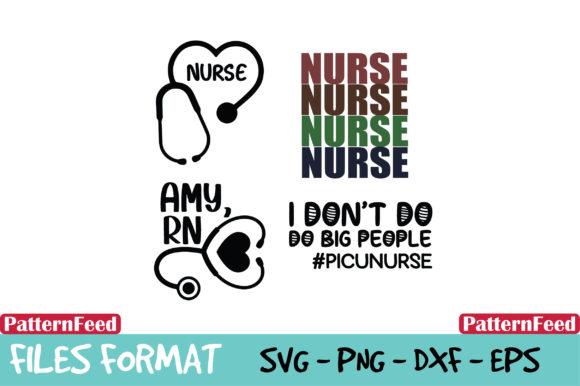
The bundle includes several distinct phrases: "AMY RN," "I don’t do big people," "PICU nurse," and a repetitive "Nurse, Nurse, Nurse, Nurse" layout. These are provided as digital download cut files, specifically noting SVG formats in the description. For those of us working in Graphics and vector-based design, starting with clean SVGs is a significant advantage. It allows us to inspect the paths before converting them into a machine embroidery design or using them for hybrid projects like heat transfer vinyl combined with stitching.
First Impressions and Visual Personality
The immediate mood of this collection is lighthearted and relatable. Nursing is a high-stress profession, and humor is a common coping mechanism. The "I don’t do big people" line, likely aimed at pediatric nurses, has a playful typography that suggests a casual, friendly vibe. This isn't formal medical branding; it’s personality-driven. For an embroidery project, this means the design needs to feel approachable. If the lines are too rigid or the spacing too tight, the joke gets lost in the thread.
I noticed that the "Nurse, Nurse, Nurse, Nurse" design relies on repetition. In embroidery, repetition can be tricky. If the stitch density is too high across multiple lines, you risk puckering the fabric. My first step was to open the files in my digitizing software to check the node count and pathing. Since the product description highlights SVGs, I had to ensure that any conversion to an embroidery file maintained the integrity of the letterforms. Thin serifs or tiny details in the "AMY RN" text could easily disappear if not properly adjusted for stitch type.
Real-World Application: The Tote Bag Test
To evaluate practicality, I decided to simulate a project for a local boutique client who sells personalized gifts for healthcare workers. I chose a heavy cotton tote bag as the test medium. Tote bags are forgiving, but they show poor tension immediately. I selected the "PICU nurse" design for this test.
Using a standard hoop size of 5x7 inches, I positioned the design centrally. For this application, I opted for a fill stitch on the larger letters to give them body and durability, while using a satin stitch for the smaller accents to keep the definition sharp. The result was promising. The humor landed well, and the design didn't look like an afterthought. It felt like a intentional piece of custom apparel or accessory design.
However, the "I don’t do big people" phrase required more attention. The playful font had some irregular curves. In embroidery, irregular curves can lead to jagged edges if the running stitch underlay isn't sufficient. I added a double run underlay to stabilize the fabric before the top stitches went down. This extra step made the difference between a amateur-looking stitch-out and a professional finished product.
Fabric Considerations and Stitch Behavior
Not every fabric behaves the same way. While the tote bag worked well, I considered how these designs would perform on a sweatshirt embroidery project. Fleece and terry cloth are textured and fluffy. If the thread colors don't contrast enough with the fabric, the text becomes unreadable. For the "Nurse, Nurse, Nurse, Nurse" design, which relies on visual rhythm, I would recommend using a high-contrast thread color against dark fabrics.
For baby embroidery items, such as onesies or burp cloths, safety and comfort are paramount. The "I don’t do big people" design is perfect for pediatric staff gifts, but the stitch density must be reduced. A dense fill stitch on a thin onesie will feel stiff and uncomfortable against a baby's skin. In this case, I would switch to a lighter fill or even consider an applique design approach where the text is cut from fabric and stitched down, reducing the amount of thread on the garment.
When working with stretchy fabrics like caps or performance tees, stabilization is non-negotiable. A proper stabilizer prevents the design from distorting during washing. I always test on scrap fabric first. For this bundle, I found that a medium-weight cut-away stabilizer worked best for the denser parts of the "PICU nurse" text, ensuring the letters remained upright and legible after multiple wash cycles.
Commercial Viability for Etsy Sellers and Craft Businesses
For Etsy sellers and small shop product creators, this bundle offers quick turnaround potential. The humor is niche-specific, which helps in targeting the right audience. Nurses love recognizing their specific units, like PICU or ER. Using these designs in commercial embroidery requires checking the license terms carefully. Since this is a free download, I advise reading the included license file to confirm if commercial use is permitted for physical goods.
Creating printable mockup assets for online listings is easier with SVGs. You can place the vector graphics onto product photos to show customers what the embroidered patch or direct stitch will look like. This builds trust and increases buyer engagement. However, ensure your mockups accurately represent the texture of embroidery. A flat vector looks different than a raised satin stitch.
Designer Notes and Final Verdict
Before you commit to a large production run, keep these practical tips in mind:
- Test on Scrap Fabric: Always stitch out a sample on the exact fabric type you plan to use. Check for puckering or thread breaks.
- Check Thread Contrast: Ensure the thread colors stand out against the fabric texture. Low contrast makes text hard to read.
- Review Stitch Density: High density can cause stiffness. Adjust settings for delicate fabrics like those used in baby embroidery.
- Confirm Hoop Size: Make sure the design fits your machine’s hoop size without needing to re-hoop, which can cause alignment issues.
- Inspect Small Details: Zoom in on the SVG paths. Tiny gaps or overlapping nodes can cause machine errors.
- Verify Licensing: Confirm if the license allows for selling handmade product items or if it is for personal use only.
The Free Funny Nurse Design Bundle is a solid resource for designers who understand how to adapt vector art for embroidery. It’s not a plug-and-play solution for every scenario, but with proper digitizing adjustments and fabric testing, it can produce charming, high-quality items. Whether you are making a holiday embroidery gift for a nurse friend or stocking your craft business with unit-specific apparel, this bundle provides a good foundation. Just remember that the quality of the final design assets depends heavily on your execution and attention to detail.