He Knows when You re Shit Faced: A Designer Review
As the holiday season approaches, the influx of Christmas embroidery requests in my studio ramps up significantly. Clients are looking for something that breaks away from the traditional red and green snowflakes and nativity scenes. They want humor, they want personality, and they want a design that sparks a conversation. That is exactly where I found myself evaluating the He Knows when You re Shit Faced machine embroidery design. Before I commit to stitching this on a client's custom apparel or adding it to my own Etsy shop inventory, I needed to see how this graphic holds up under the scrutiny of real-world production.
First Impressions: Humor Meets Holiday Craftsmanship
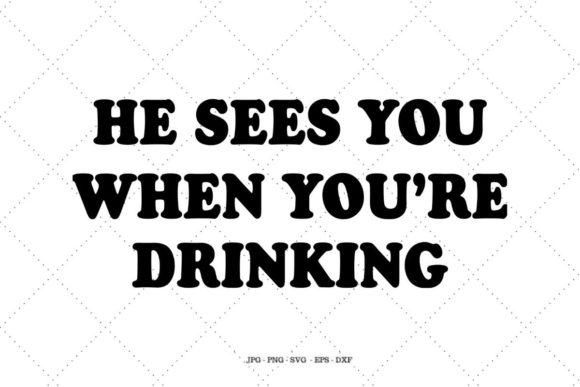
When you first load the embroidery file into your digitizing software, the visual impact is immediate. The text-based layout of He Knows when You re Shit Faced relies heavily on typography rather than complex iconography. This is a double-edged sword in the world of Crafts. On one hand, it keeps the stitch count manageable and the run time short, which is perfect for high-volume production runs. On the other hand, the success of the finished product hinges entirely on the font choice and the clarity of the lettering.
The mood created by this design is unapologetically cheeky. It fits perfectly into the "ugly sweater" aesthetic without requiring an actual sweater. For a small business owner or an Etsy seller looking to capitalize on the trend of funny holiday gifts, this digital embroidery file offers a distinct advantage: it targets a specific demographic—adults who appreciate dark humor during the festive season. Unlike generic baby embroidery or delicate nursery decor, this piece demands a bolder canvas.
Real-World Application: Where Does It Work Best?
In my experience testing designs for commercial viability, context is everything. I recently prepared a mockup using He Knows when You re Shit Faced on a heavy-weight cotton tote bag. The result was surprisingly effective. The sturdy fabric provided a stable base, allowing the fill stitch within the letters to sit flat without puckering. This suggests that the design is excellent for tote bag design projects, kitchen towels, and perhaps even as an embroidered patch for denim jackets.
However, the scenario changes when we consider sweatshirt embroidery. Because the phrase is quite long, fitting it onto the chest of a standard hoodie requires careful scaling. If you shrink the design too much to fit a small area, the legibility suffers. Conversely, if you stretch it across the back of a sweatshirt, the stitch density needs to be checked to ensure the thread doesn't bunch up on the curved surface of the garment. For custom apparel, I recommend using this design on items with a large, flat panel, such as a canvas apron or a pillow cover, where the text can breathe.
This is not a design for baby clothes or delicate nursery decor. The language is explicitly adult-oriented, making it unsuitable for children's items. Instead, think of it as a premium personalized gift for the friend who always shows up at your holiday party ready to celebrate. It adds a layer of exclusivity to your handmade product line, signaling that your shop understands the modern, irreverent side of the holidays.
Navigating Technical Challenges and Fabric Choices
While the concept is strong, the execution depends on your technical choices. One major consideration is the hoop size. Since this is primarily a text-based Graphics design, it likely spans a decent width. If you attempt to stitch this in a 4x4 hoop, you will be forced to reduce the font size drastically, potentially turning the words into illegible blobs. Always check the dimensions of the machine embroidery design before starting. If you need to fit it into a smaller space, you may need to split the text into two lines, which alters the visual flow.
Fabric texture plays a critical role here. On smooth cotton or linen, the running stitch outlines and satin stitch details will pop beautifully. However, on textured fabrics like fleece or knit sweaters, the definition of the letters can get lost. The pile of the fabric might obscure the finer points of the typography. In these cases, using a tear-away stabilizer is non-negotiable to prevent shifting, but even then, the visual clarity might suffer compared to a woven fabric.
Color contrast is another vital factor. When I tested this design on a dark navy background, the white thread worked well, but the thread colors needed to be bright enough to stand out against the deep hue. If you are selling this as a small shop product, offer a limited color palette that guarantees high visibility. Avoid pastels on light backgrounds; the joke won't land if the customer has to squint to read it.
Strategic Advice for Sellers and Makers
If you are planning to use He Knows when You re Shit Faced for commercial embroidery, there are several practical steps you must take to protect your brand and ensure quality. First, always test the design on scrap fabric that matches your final material. Stitch out a sample to check for any gaps in the fill stitch or areas where the thread tension might be off. This prevents wasting expensive materials on a flawed batch.
Secondly, review the licensing terms carefully. Many digital product sellers offer different tiers of usage rights. Ensure you have the right to sell finished items made with this design. If you are creating printable mockups for your online store, verify that the license allows for digital representation. Misunderstanding these terms can lead to account suspensions on platforms like Etsy or Shopify.
Finally, consider the longevity of the trend. While funny holiday phrases are popular, they can date quickly. This design works best as a seasonal item. Do not over-produce. Create a limited run of holiday embroidery pieces to gauge interest. If the design sells out quickly, you can restock next year. If it sits on the shelf, you haven't lost a significant investment.
Final Verdict: A Bold Choice for the Right Audience
He Knows when You re Shit Faced is a polarizing design, and that is its greatest strength. It filters your audience immediately, attracting customers who value humor and authenticity. For the experienced designer willing to manage the technical nuances of text-based embroidery, it offers a unique opportunity to create memorable finished products.
Whether you are decorating a cap, a kitchen towel, or a pillow cover, the key is to respect the limitations of the medium. Use the right stabilizer, choose the correct fabric, and ensure the text remains legible. If you do, this embroidery project will become a standout piece in your holiday collection, driving engagement and sales through its bold personality. Just remember: test before you stitch, and always know your customer.